September 30, 2026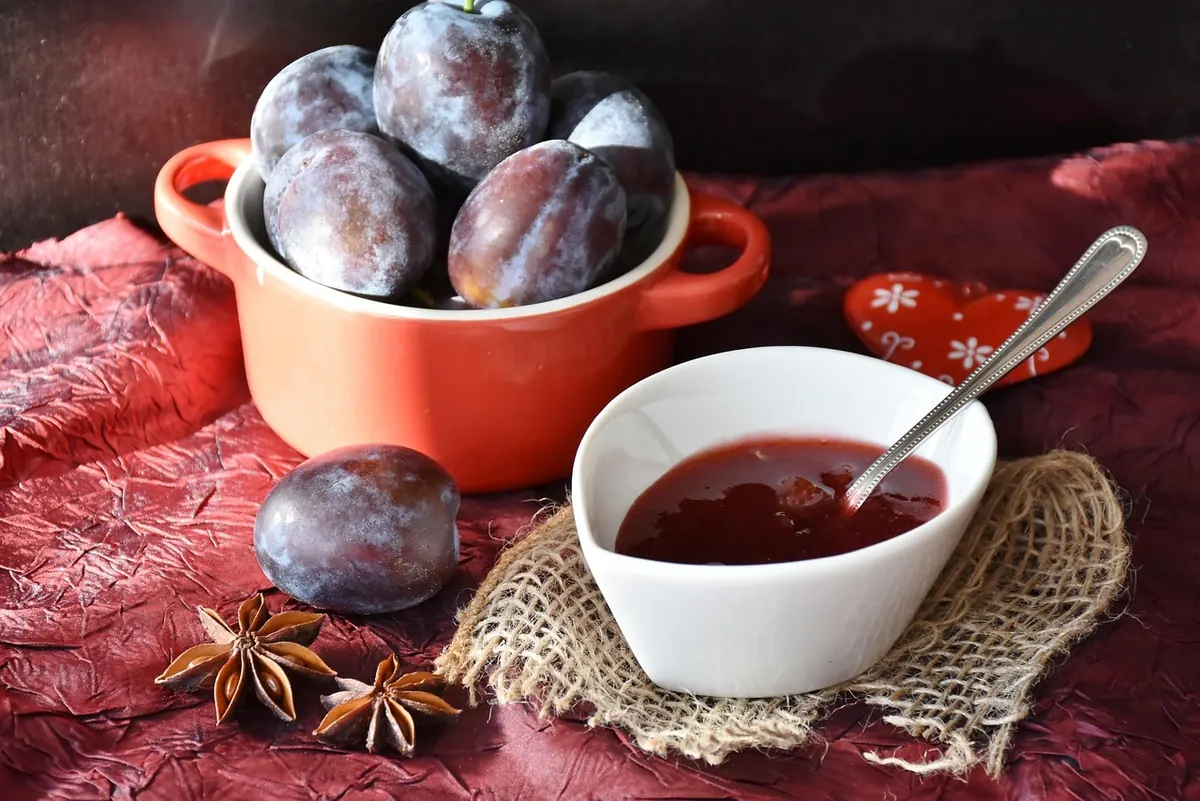
Every September, the lanes around the Lyth Valley turn a deep, dusty blue. Damsons hang in the hedgerows and orchard rows between Kendal and Windermere — small, oval, and coated in a bloom that rubs off on your fingers and stains them purple. Eaten raw they are bracingly sharp. Cooked with sugar they turn dense and faintly winey, in a way that ordinary plums never quite manage. They also carry plenty of pectin, which means they set easily, and that makes them a forgiving fruit for anyone new to preserving. A bag of damsons, a big pan and an afternoon will get you a long way.
Why Cumbrian Damsons Are Worth the Effort
Damson growing is woven into this corner of the county. The Lyth Valley's orchards are the best known, but trees turn up in gardens, field corners and old hedges right across Cumbria, often cropping heavily in years when everything else sulks.
What makes them special in the pan is the balance. The skin is tart, there's a faint bitter edge just under it, and the flesh is dense rather than watery. All of that survives sugar, which is why damson jam tastes of fruit rather than just of sweetness. They also freeze beautifully: tip them into bags whole and use them straight from frozen. The freeze-thaw softens the skins, which helps both jam and gin along.
Picking and Preparing
Wait until the fruit is properly ripe. A ready damson is deep blue-black, gives slightly under a gentle squeeze, and comes away from the branch with a light tug. Hard fruit will never taste of much. If you're gathering from a hedgerow, make sure you have permission to pick and that you can identify the tree confidently — sloes look similar from a distance, but they are rounder, smaller and even more mouth-puckering.
The first frost traditionally softens damsons, but you don't have to wait for the weather. A night in the freezer does the same job. Before you start, get your kit together:
- A large, heavy-based pan — preserves boil up and need room to do it
- A long wooden spoon and a jug for filling jars
- Clean jars, lids and a funnel
- A square of muslin or a fine sieve for straining
- A saucer in the freezer for testing set, and a jam thermometer if you have one
Damson Jam: The Place to Start
Roughly equal weights of fruit and sugar is the classic ratio, and it works without added pectin. For a first batch, try 1.5kg of damsons, 1.5kg of granulated sugar and a splash of water.
- Rinse the fruit and pick out leaves and stalks. Leave the stones in — chasing them out beforehand is miserable work, and they cook out easily enough.
- Put the damsons in the pan with about 150ml water and simmer gently for 15 to 20 minutes, until the skins have split and the fruit has collapsed.
- Take the pan off the heat, add the sugar and stir until every grain has dissolved. Sugar added to a boiling pan can catch and burn.
- Bring back to a hard boil and cook for 10 to 15 minutes, stirring now and then. Test after 10 minutes: drop a teaspoon onto the cold saucer, let it cool for a moment, then push it with a fingertip. If it wrinkles, it's ready. If it's still syrupy, boil for another two minutes and test again.
- Skim off any foam, then pot into warm sterilised jars and seal.
Fish out the stones with a slotted spoon as you fill the jars if you like, or leave them in and label the jar so nobody gets a surprise. If you overshoot the setting point and the jam turns stiff, don't panic — you've made damson cheese, which is excellent sliced with cheese or warmed through and spooned over ice cream.
Damson Gin: The Patient One
This is the least fussy preserve in the cupboard and the one people ask for by name. Use about 500g of damsons to 250g of sugar and a litre of gin. Prick each damson with a skewer, or freeze them first and skip the pricking.
Fill a large clean jar with the fruit and sugar, top up with gin, and seal. Shake it every day for the first week, then once a week after that. Three months is the minimum; six is better. Strain through muslin or a fine sieve and bottle. A little haze is normal and harmless. The gin keeps for years and improves as it sits, so make more than you think you need. Don't throw the spent fruit away — spoon it over vanilla ice cream.
Spiced Damson Chutney
Sharp fruit makes the best chutney, and this one is built for a plate of cold ham or a wedge of sharp Cumbrian cheese. You'll need 1kg damsons, 500g chopped onions, 300g light muscovado sugar, 500ml cider vinegar, a tablespoon of mustard seeds, a thumb of grated ginger, a cinnamon stick, a few cloves, a star anise and a good pinch of salt. Add chilli flakes if you want heat.
Soften the onions in a little oil, then add everything else. Simmer uncovered for an hour to ninety minutes, stirring more often towards the end, until a spoon dragged across the base leaves a clean line. Pot into sterilised jars. It will taste harsh at first — leave it four to six weeks in a cool cupboard and it settles into something much rounder.
Jars, Labels and Keeping
Sterilise jars by washing them hot and drying them in an oven at around 140C for fifteen minutes, or run them through a hot dishwasher cycle and fill them while still warm. Fill to the brim, seal immediately and label with what it is and when you made it.
Jam keeps about a year in a cool, dark cupboard; chutney at least as long; gin for years. Once opened, keep jam and chutney in the fridge. Don't cut the sugar in jam or the vinegar in chutney to make them "healthier" — in preserving, those are what keep the contents safe. And if a jar smells wrong, has mould on top or the lid has popped, bin it rather than scraping the surface off.
Start With One Pan
If this is your first year, make the gin. It takes ten minutes, needs no setting point and forgives everything. Use the rest of the bag for a single batch of jam, and keep notes on the jar lids: fruit weight, sugar weight, date. Next September you'll know exactly how you like it, which is the whole point of making your own.
Photo: RitaE / Pixabay